waterpark seizure

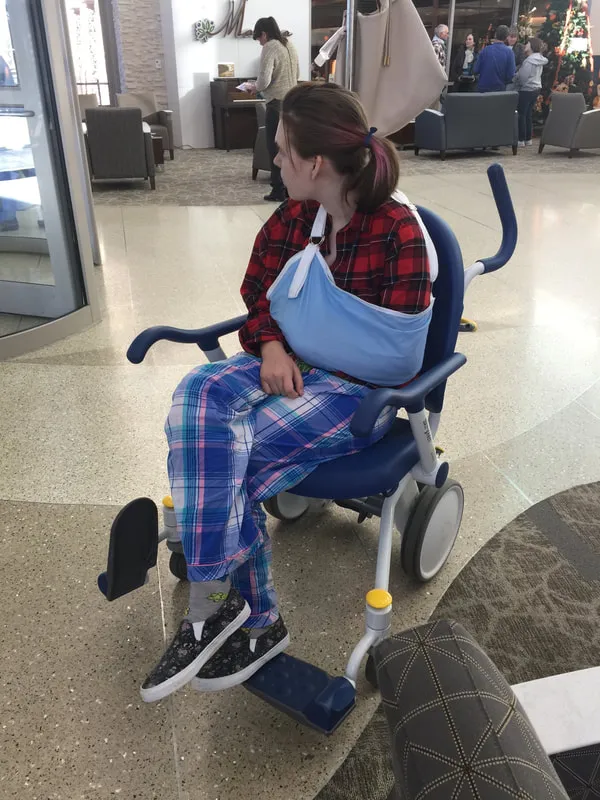
This epilepsy life never stops giving. Allie had a seizure at the waterpark over school break. She was waiting in a long line with her dad at the top of the highest waterslide. Quickly, Allie dropped into a 4 minute tonic clonic. She came out of it on her own to be carried down all those steps to a full hallway of paramedics, first responders and hotel staff. Calmly they took care of her and us. We packed up quickly and sadly drove home in the family minivan. Allie is recovering well after her cluster subsided, six seizures total this time around.

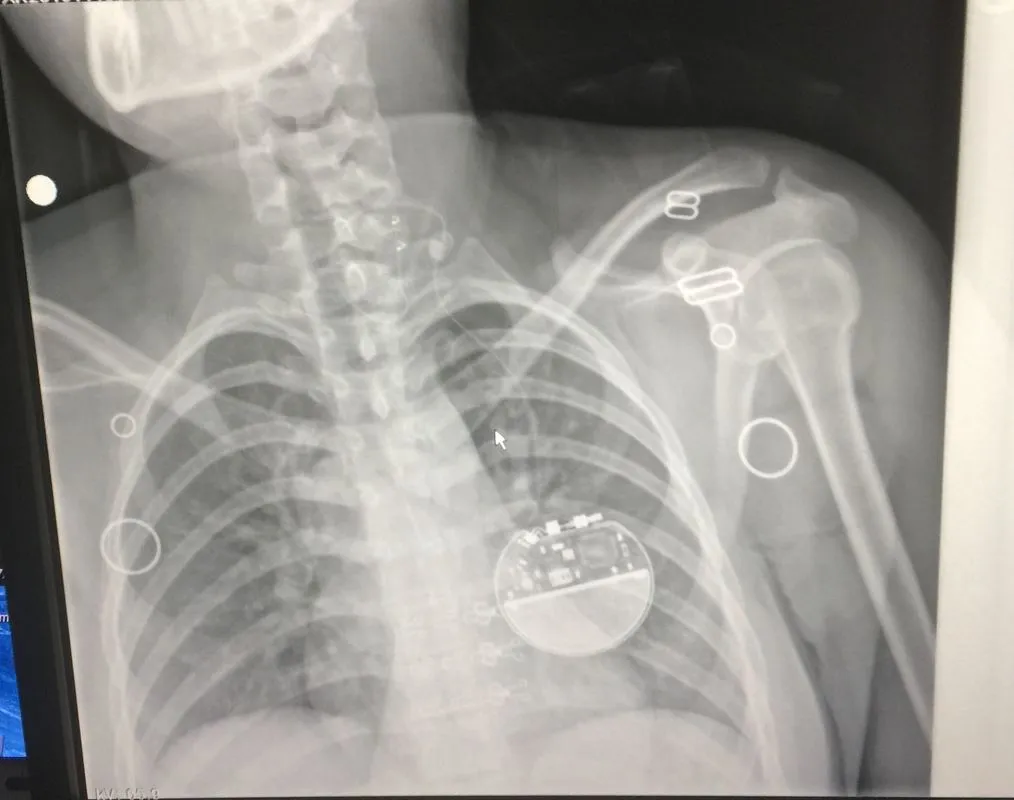
A painful arm and shoulder was a result of her fall. The next day she was convinced it was broke. Luckily the x-ray came back showing no broken bones. Advil and an old arm sling for a few days she should be back to playing basketball in no time!

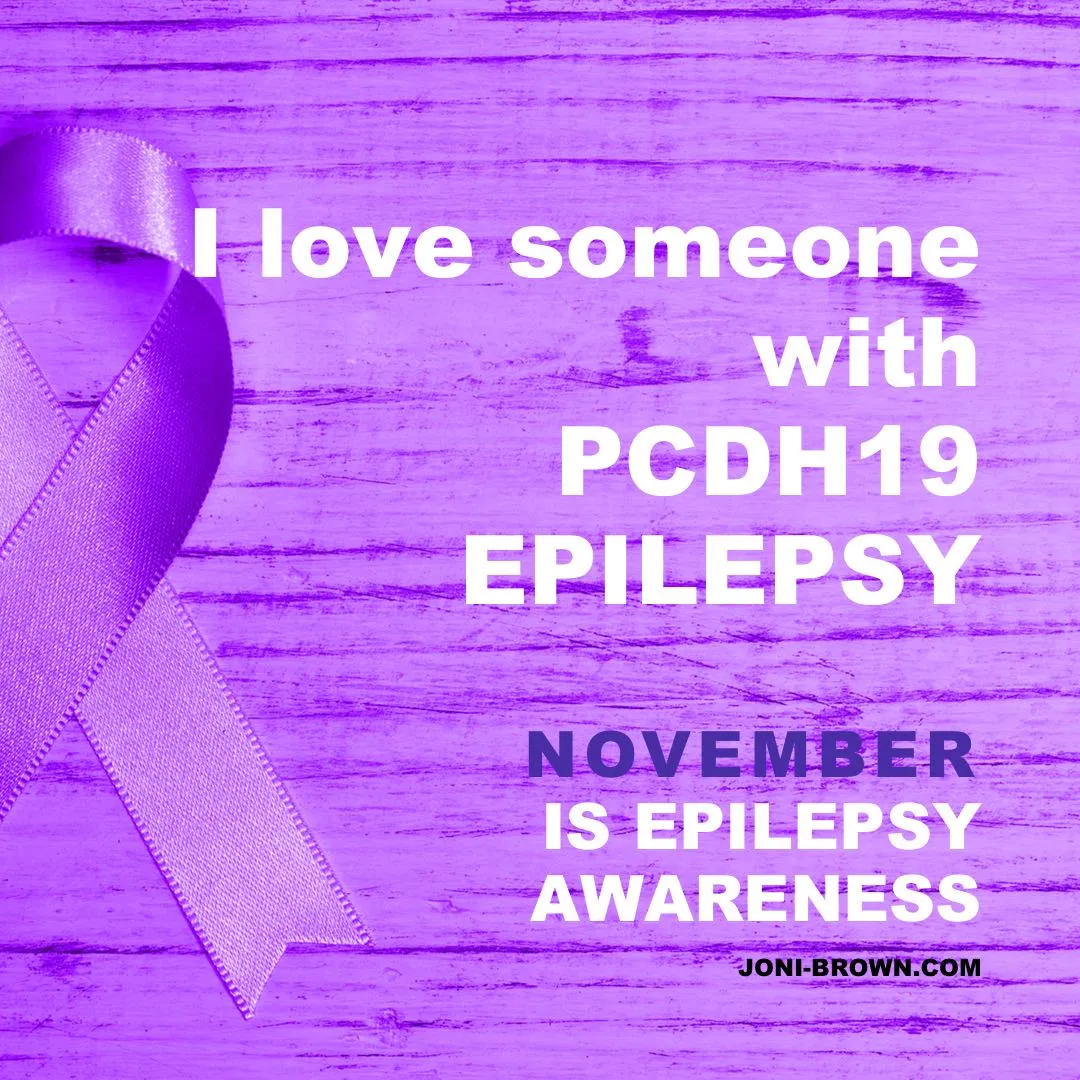
Waterparks are a family favorite. Seizures, over the past decade has never stopped us from doing what we love. This one stopped us. We made it as positive as we could as most parents do in horrible situations. We move forward and plan for our next adventure. #hope #novemberepilepsyawrenessmonth #vns

Above: No broken bones here. The x-ray also shows her VNS implant. Pretty cool!

The grocery store worker that gave me hope

Today I was checking out at my local grocery store. The young man bagging my groceries had special needs. He was very social with excellent eye contact as he asked me if I had any fun plans for the weekend.

I smiled and said, “Yes. It should be a nice weekend to grill out.”

I quickly asked him, “How about you? Do you have any plans?”

He simply and politely said, “I plan to relax at home.”

It was a perfect exchange of pleasantries from one to another. As he bagged the rest of my grocery haul, he looked over at a co-worker and asked if she was done for the day, and she said, “No. I’m just on lunch if you wanna join me after you finish here.”

I felt very happy for the young man. He has his place in the workforce, earns a paycheck, contributes to society, and clearly has no problems with socializing. As I finished my payment, smiled goodbye, and rolled out my grocery cart to my car, I felt a huge wave of sadness come over me. By the time I got to my minivan, my emotions were too much to contain. I placed two bags on the car seat and hid my face inside as I wept behind my large black sunglasses. I was sad for my teenage daughter. She lives with a severe form of epilepsy and autism. Although she has these challenges, she still perseveres in her daily life, and her social spirit is a strong force. Sometimes she is the queen bee of socializing, with appropriate conversations and happiness all around. However, she has an unpredictable side to her that consists of inappropriate behavior. Sometimes we cannot take her in public for the safety of herself and others.

As I cried in my minivan, I sobbed at the future for her. Where will she fit in? What will her days look like post-high school graduation? How will an employer understand if she cannot come to work because she is having a seizure cluster? What employer will see her as a sweet human being and not someone with disabilities?

Today was one of those days where the future was too much for me to think about. Moving forward, I need to be her strongest advocate. Look for the best work programs, so she has a chance to be part of society. I wish for her to not only take up space in the workplace, but to be a positive contributor to an organization that will help her have a good quality of life. Even though I am not sure of what that will look like, I will figure it out in the near future.

a 28 page evaluation

I thought it was a dreaded IEP* meeting I was attending that day. It was December 13, 2011. Allie was age 8 and in 2nd grade. My husband had a meeting and couldn’t attend. I have to go ALONE to this one? Simple! I can go to an IEP meeting without my spouse. He always goes to every school meeting and event. I can do this.

IT’S NOON.

The smiling staff and I gathered in a warm, small conference room with an oval table.

The panel was made up of an autism specialist, the Special Ed director, Special Ed teacher, OT lady with her OT dog Jack, Phy Ed DAPE staff, school Principal, school Psychologist, and her 2nd grade teacher. All very pleasant professional women that care about Allie. I quickly found out this was actually her re-evaluation meeting. Allie just had completed 30 days of testing. I knew about the re-evaluating, but I thought it would be positive remarks in a packet sent home in her backpack.

This meeting was different.

Here were the findings that were reported to me…

  1. She has not improved since first grade in reading or writing.
  2. She has lost some of her phy ed skills from last year.
  3. She does her math, but not at 2nd grade level.
  4. Her IQ score has dropped since the last time she was evaluated.
  5. She does not comply with teachers or help staff like she did in first grade.
  6. Should her primary diagnosis be autism or other health issues? They spent a lot of time and discussion on that one.
  • Basic reading skills 14th percentile.
  • Reading Comprehension 11th percentile.
  • Math Calculation 18th percentile.
  • Math Reasoning 21st percentile.
  • Written Expression 6th percentile.

Two and a half hours later! I left that room and walked to my car. What the hell just happened? I was paralyzed sitting in front of my steering wheel with the car on idle. I was in some kind of state of shock from the 8 school officials plus Jack the service dog, going through a 28 page evaluation and reporting to me all the depressing stuff about my only child. Then I pulled over into a public parking lot. Hot, sweaty, emotionally drained. I called my husband and cried. I don’t even remember what I told him. After I got home, I cried my eyes out for the next four hours. Alone, in my bed with the curtains shut tight.

How could she grow and learn so much in first grade and reverse her skills in second grade? It took me about 2 weeks to not to think about that dreadful meeting.

*Individualized Education Program also called and IEP is a document that is developed for an individual who requires extra or special education.

Comment below about your school meeting!


20 electrodes

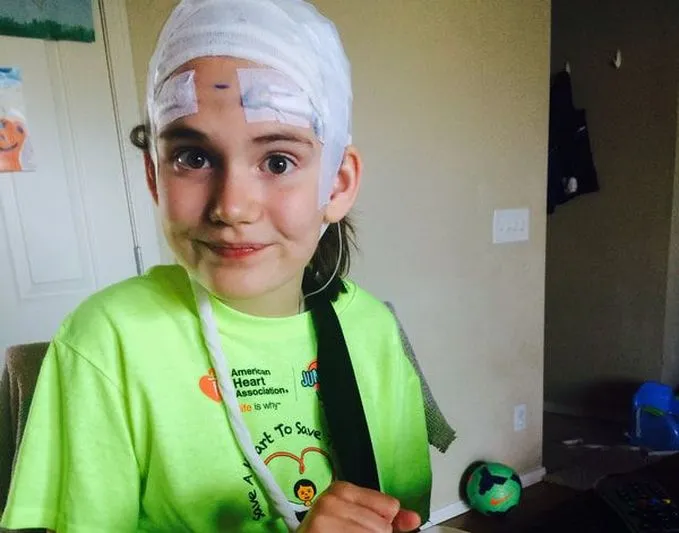
Allie age 10 with an ambulatory EEG at home. This type of EEG allows her to carry on with regular activities.

Allie has three types of seizures, absence, partial complex, and tonic-clonic seizures.
She has “breakthrough” seizures when she gets sick. Even though she is on two anti-seizure medications, some seizures “break through” the medications. She will have what is called cluster seizures where a seizure will appear every hour on the hour for about 24 hours. We do administer a rescue medication at the first sign of a seizure. This sometimes will stop the kindle effect. When Allie has a seizure she needs to sleep for about an hour after each seizure. There is a two day recovery time after.

“Does she have grand mal seizures?”
Then they look at you like a big feel sorry for me stare.

If I had a dime for every time a person asked me this question, I would be writing from my beachside mansion in Hawaii. Grand mal type seizures are the shaking type that you see dramatized on television or in movies. There are other types of seizures: Absence, Myoclonic, Clonic, Tonic Atonic to name a few. Typically Allie has these three different types of seizures.

  1. Absence seizures cause a short loss of consciousness (just a few seconds) with few or no symptoms. The patient, most often a child, typically interrupts an activity and stares blankly. These seizures begin and end abruptly and may occur several times a day. Patients are usually not aware that they are having a seizure, except that they may be aware of “losing time.” -webmd.com

  2. Partial Complex causes impairment of awareness. Automatisms such as lip smacking, chewing, fidgeting, walking and other repetitive, involuntary but coordinated movements. - webmd.com

  3. Tonic-Clonic is the newer term for what used to be called a “grand mal” seizure. Tonic means stiffening, and clonic means rhythmic jerking. During the first phase comes the tonic where the muscles stiffen. After comes the clonic phase where legs and arms begin jerking rapidly and rhythmically.

EEG’s
Over the past decade, Allie has had 8 electroencephalograph’s or EEG’s. This non-invasive painless test measures the electrical signals in the brain through small electrodes which are glued to the scalp. This simple test is done in the doctor’s office for approximately 20-40 minutes. The trained staff apply the small electrode buttons on the scalp. The doctor will do various tests which include, flashing a strobe light, open and closing eyelids, and fun activities such as blowing a pinwheel fan. The signals are recorded, interpreted and studied by a physician.

Allie had four ambulatory EEG’s which is a 24-72 hour continuous EEG recording. The electrodes are glued on for a much longer period of time than a traditional EEG and are mobile to allow us to take it home. All activities are documented during this time span. The more data the physician captures, the better he or she can understand what causes spikes or not. Unfortunately all of her EEG’s, zero seizures were captured we can assume that the antiseizure medications were working well.

GLUE REMOVAL
After the EEG is complete the technician easily removes all 20 electrodes from the scalp. After, you are sent to their bathroom equipped with a large sink, combs, brushes, hair products, and towels to clean up the hair and scalp. The electrode glue is messy when removing from the hair. It is water soluble and with a lot of patience and rubbing some coconut oil on the glue it does eventually come out. Sometimes shampooing while digging out the glue is more difficult as the white suds hide the glue too much and you will have a hard time finding the glue chunks. Allie has long hair so the entire removal process takes about 20 min. A child with short hair would be quicker and easier.

In the comments below tell me about your EEG experiences.